II Conference - Master Battery Chair – UPM in Móstoles examines the state of the art in sodium-ion batteries
- Juan Carlos Hernández, co-CEO of Master Battery, described the chair as a bridge for the transfer of knowledge and talent between the university and the company.
- Hernández highlighted Master Battery’s commitment to Móstoles as a strategic location for establishing a leading centre for research, innovation, battery production and clean energy.
- The event was held at Master Battery’s premises and was supported by Móstoles Town Council, with the participation of the Councillor for the Economy, Ángeles García, and the Councillor for Education, Cristina Molina.
- The director of ETSIDI-UPM, Francisco Santos Olalla, highlighted the strategic value of the Master Battery Chair as a tool that integrates the university’s three fundamental missions: teaching, research and knowledge transfer.
- Marcos Lafoz and Jorge Nájera, from CIEMAT, are leading the sodium-ion battery research project, the first phase of which will be published openly on the Chair’s LinkedIn profile.
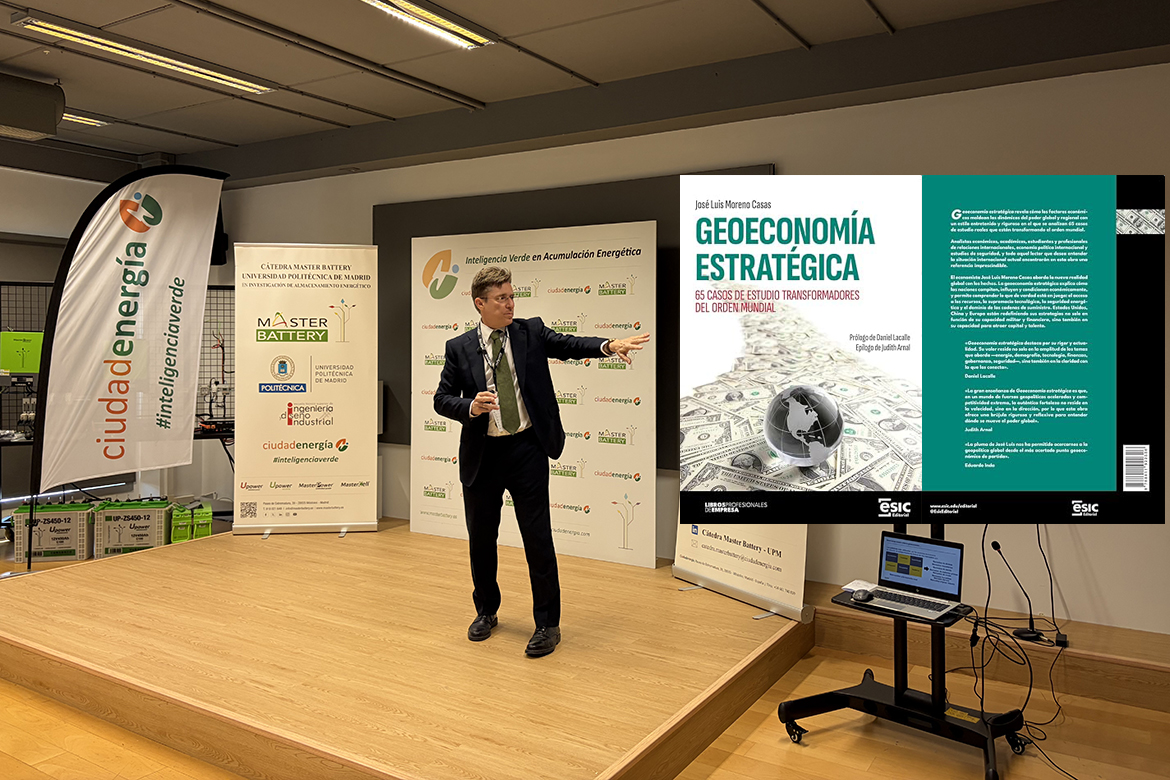
- José Luis Moreno Casas, author of the book ‘Strategic Geoeconomics: 65 case studies transforming the world order’, emphasised that Europe faces the challenge of reducing its dependence on lithium through new technologies and its own value chains.
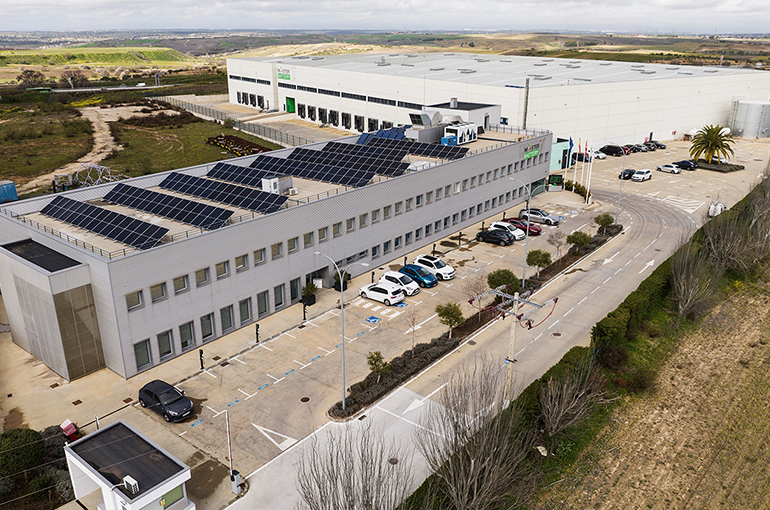
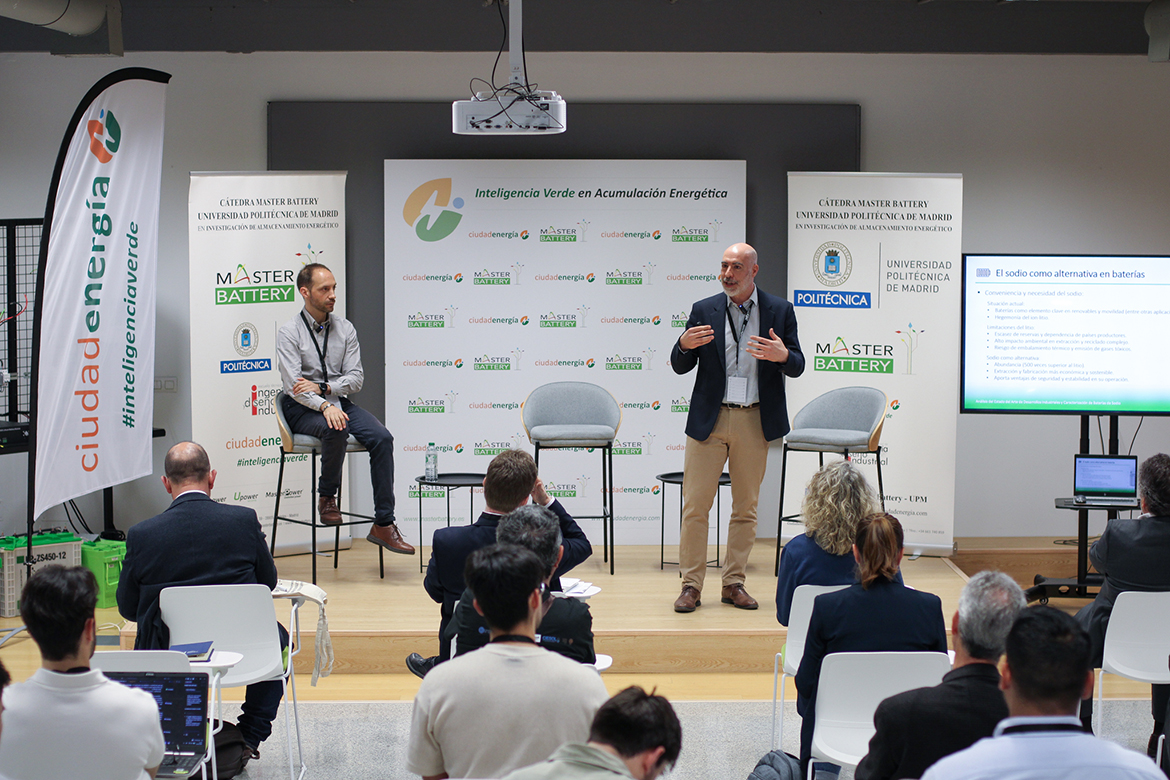
Móstoles (Madrid), 22 April 2026. The Master Battery Chair – Polytechnic University of Madrid for energy storage research held its second conference today at the Master Battery complex in Móstoles (Madrid), bringing together experts from academia, industry and institutions to analyse the challenges and opportunities in energy storage and to strengthen collaboration between the university and industry.
The conference focused on the development of new technologies, with particular attention to sodium-ion batteries, as well as on the strategic role of the energy sector in the current context.
The conference was attended by Juan Carlos Hernández and Héctor Plaza, CEOs of Master Battery; Francisco Santos Olalla, director of ETSIDI (UPM); Julio Amador, director of the Master Battery–UPM Chair; and Alberto Abanades, a member of its Committee.
Representing the research community were Marcos Lafoz and Jorge Nájera from CIEMAT. The guest lecture was delivered by economist José Luis Moreno Casas.
The Móstoles City Council was represented by Ángeles García González, Third Deputy Mayor and Councillor for the Economy, Industry, Employment, Development and Tourism Promotion, alongside Cristina Molina, Councillor for Education and Culture.
UPM Partnership – Master Battery
The event was opened by Master Battery’s co-CEO, Juan Carlos Hernández, who emphasised the strategic importance of energy storage and the need to foster partnerships between industry and academia to advance technological development.
During his speech, Hernández noted that the aim of the meeting is to promote new energy storage solutions—such as sodium-ion batteries—through collaboration between universities and industry, highlighting the role of the Chair as a key instrument in accelerating this progress.
“Energy storage has become a strategic element for industry and the economy. At Master Battery, we are working alongside the Polytechnic University of Madrid to foster a genuine partnership that will drive progress in technologies such as sodium batteries and help build an ecosystem of innovation, talent and opportunities in the energy sector”.
In this regard, he emphasised the role of the Chair as a link between academic knowledge and the business community:
“We want the Chair to serve as a genuine bridge for knowledge transfer and talent development between the university and industry”.
Hernández concluded by highlighting Master Battery’s commitment to Móstoles as a strategic hub for the sector’s development, where the company is working to establish a leading centre for research, manufacturing and innovation in batteries and clean energy, with an international reach.
He also highlighted Ciudadenergía as a space open to society, the educational community and the business sector which, in collaboration with the Chair, promotes the generation of knowledge, talent and new opportunities within the energy sector, in line with the company’s commitment to corporate social responsibility.
Master Battery Chair – UPM: strategic objectives
The next part of the event focused on the presentation of the strategic objectives and key initiatives of the Master Battery Chair – UPM. The presentation was given by Francisco Santos Olalla, director of ETSIDI (Higher Technical School of Engineering and Industrial Design), where the Chair is based. Also participating in the discussion were Julio Amador, director of the Chair, and Alberto Abanades, a member of its Committee.
Francisco Santos Olalla highlighted the strategic value of the Master Battery Chair as a tool that brings together the university’s three core missions: teaching, research and knowledge transfer. In this regard, he emphasised that this collaborative model helps to improve student education, boost research activity and strengthen links with the business community. He also stressed the need for this to translate into concrete actions, establishing a ‘real chair’ with a tangible impact and incorporating a key dimension such as social impact.
The Chair’s director, Julio Amador, explained the activities currently underway, such as the provision of equipment, student visits and the organisation of technical conferences. He also highlighted initiatives such as extracurricular work placements, basic research studies and awards for the best Master’s Theses on batteries, aimed at recognising talent and fostering specialisation. In this context, he particularly valued the collaboration with organisations such as CESAL on training initiatives linked to renewable energy, helping to generate a dynamic ecosystem with a social impact.
Finally, Alberto Abanades emphasised that this initiative represents “one of the most powerful mechanisms for collaboration between universities and industry”, by combining the UPM’s research capabilities with the expertise of a company in the energy storage sector. As he pointed out, this partnership makes it possible to identify the sector’s needs, drive innovation and train qualified professionals, thereby contributing both to the energy transition and to the creation of wealth and social well-being.
Research project on sodium batteries, the main focus of the conference
The central and most significant part of the conference centred on the presentation of the research project being carried out by the Master Battery Chair – UPM, entitled “Analysis of industrial developments and characterisation of sodium-ion batteries”, conducted by researchers from CIEMAT.
The study is led by Marcos Lafoz, a research scientist and head of CIEMAT’s Electric Drives Unit, alongside Jorge Nájera, a senior scientist in the same unit; both hold PhDs from the UPM and are specialists in energy storage.
During the presentation, Marcos Lafoz highlighted the rapid progress of this technology in recent years, noting that “sodium-ion batteries have moved from the experimental phase to commercial production”. In this regard, he emphasised that, compared to the limitations of lithium—such as resource scarcity or safety risks—sodium offers an alternative based on more abundant materials, with lower costs and greater sustainability. Although it does not replace lithium in high-energy-density applications, he stated that it is already a competitive technology in both electric mobility and stationary storage, and that both will coexist in the future.
For his part, Jorge Nájera focused on the importance of modelling and characterising these batteries for their real-world application. “To successfully integrate sodium batteries into strategic sectors, we need to accurately predict their behaviour”, he explained. In this context, he highlighted the role of mathematical models as a key tool for simulating their operation, as well as the need for experimental testing to validate their performance, thermal behaviour and ageing. This approach allows for optimised management and the precise sizing of energy installations.
The Master Battery – UPM Chair is currently working on editing the study for open-access publication, which will soon be available via its LinkedIn profile.
Geo-economic context: energy, batteries and strategic autonomy
The event also featured a presentation by economist José Luis Moreno Casas, author of the book *Strategic Geo-economics: 65 Case Studies Transforming the World Order* (ESIC Editorial, 2026), who discussed the global geo-economic context within which the energy sector is developing, and in particular the field of batteries.
During his presentation, Moreno highlighted that the current landscape is characterised by uncertainty, volatility and growing global competition for control of strategic resources, within an increasingly multipolar environment. In this context, he emphasised the key role of energy, raw materials and supply chains as determining factors in countries’ economic and technological power.
He also highlighted the heavy reliance on critical materials such as lithium, the production and refining of which are highly concentrated, particularly in China, posing challenges in terms of strategic autonomy for Europe. In this regard, he noted that the development of alternative technologies, such as new battery chemistries, and the promotion of domestic value chains represent an opportunity to enhance industrial competitiveness.
Moreno concluded by emphasising that the energy transition is not only a technological challenge, but also a geopolitical and economic one, in which foresight, innovation and resource management will be key to the positioning of countries such as Spain in the new global landscape.
Closing ceremony of the 2nd Master Battery – UPM Conference
The 2nd Master Battery – UPM Conference was well attended by representatives from the Móstoles City Council, who expressed their support for the event and for Master Battery’s business projects, whilst also highlighting the work carried out by Ciudadenergía within the educational sector of the Community of Madrid.
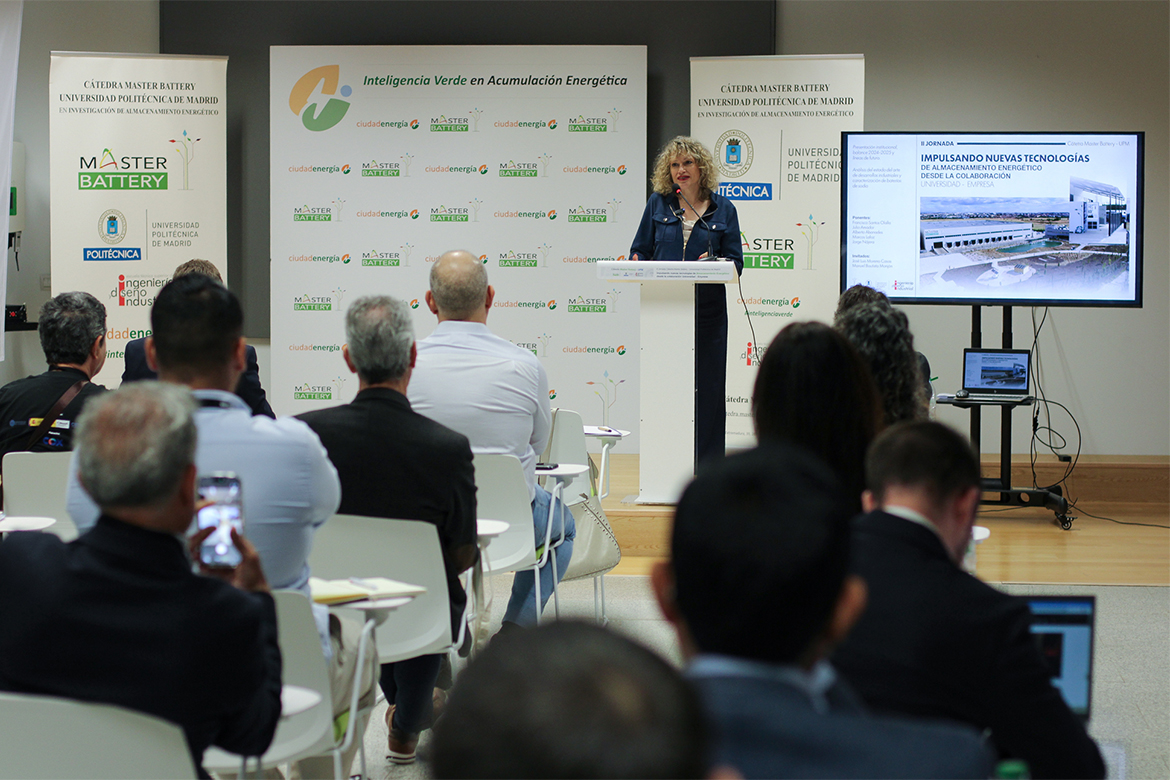
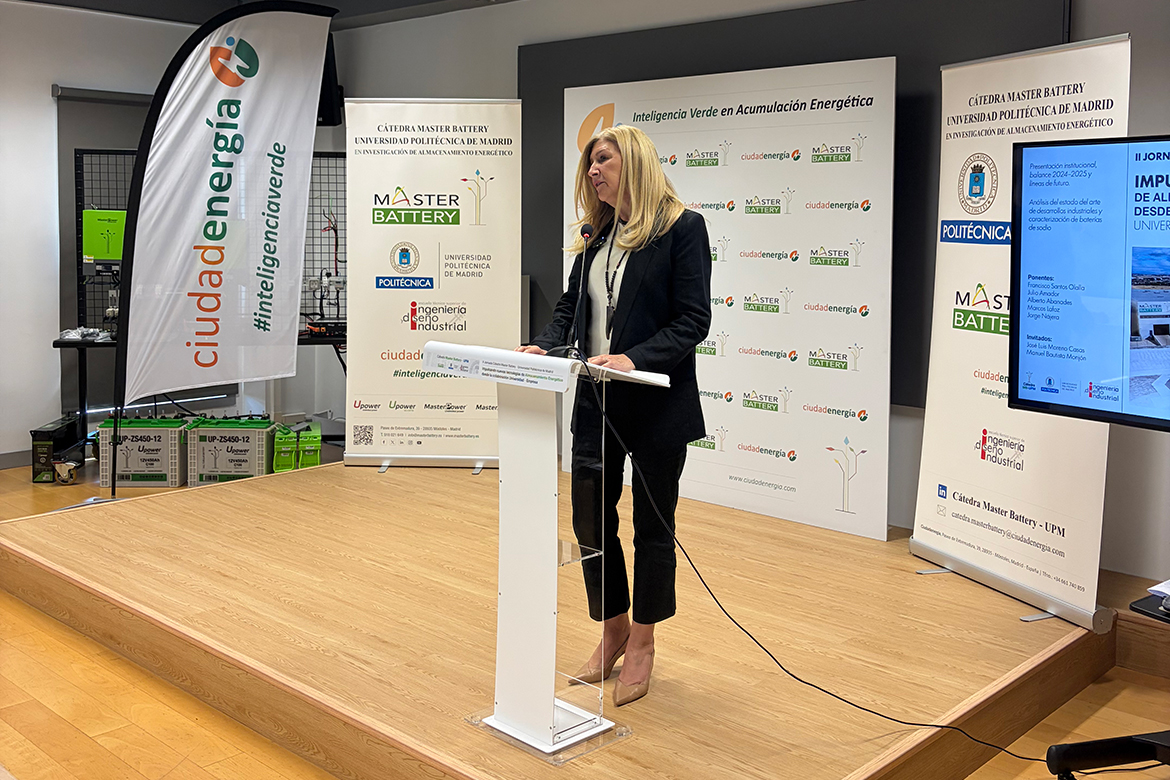
The closing ceremony began with a speech by Cristina Molina, Councillor for Education and Culture in Móstoles, who expressed her appreciation to all participants for their involvement and for sharing their knowledge and vision regarding the future of the energy sector. She also highlighted the work of the research team, which has enabled the public to gain insights from both the academic sphere and experts in geoeconomics, such as José Luis Moreno Casas.
During her speech, the councillor highlighted the role of such initiatives as forums for meeting and debate that help drive the sector’s development, whilst strengthening the link between knowledge, business and society. In this regard, she also emphasised their impact on education, by fostering careers, creating opportunities and introducing young people to strategic sectors.
“Móstoles has talent and a strong work ethic, and thanks to partnerships like this one, it has the momentum needed to continue growing as a city and as a community”, said Cristina Molina, who thanked all those involved for making the event possible.
Finally, Ángeles García González, Third Deputy Mayor and Councillor for the Economy, Industry, Employment, Development and Tourism Promotion, took the floor to close the 2nd Master Battery–UPM Chair Conference.
Speaking in a friendly tone, he thanked Master Battery for the invitation and greeted the whole team, highlighting the high standard of the event. During his speech, he emphasised that one of the main objectives of his department is to maintain close ties with businesses, supporting their innovation and growth, and he praised Master Battery’s track record as an example of business development.
He also highlighted the Móstoles City Council’s commitment to boosting the competitiveness of the local business community, assuring that this effort would be reflected throughout the current year.
Finally, he reiterated his firm support for Master Battery, acknowledging the effort and dedication of its team in their commitment to business growth, and affirmed that they would continue to have the institutional backing of the Móstoles City Council.
About Master Battery
Master Battery is a Spanish company based in Móstoles (Madrid), specialising in off-grid energy, smart storage systems and battery manufacturing. With an international presence, it has established a strong foothold in Europe and has expanded its operations in Africa and Latin America through strategic branches and technological cooperation with local partners.
About Ciudadenergía
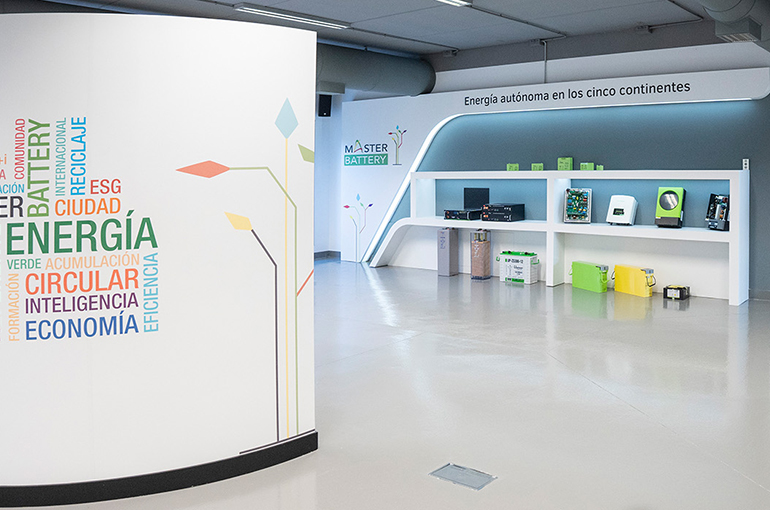
Ciudadenergía is a community-focused initiative launched by Master Battery under the slogan #inteligenciaverde. Launched in March 2022, it serves as a platform for outreach, training and networking in the fields of energy storage and off-grid energy, with a particular focus on the education and university sectors.
Ciudadenergía channels Master Battery’s sustainability and corporate social responsibility initiatives, opening its facilities to schools, vocational training centres and universities.
 |
Click on this link to access the information and programme for the conference |